

- Core Group Members
Showing 1–19 of 19 items
- Search
-
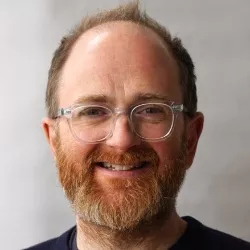 Christopher WhiteChair / Grant Holder Scientific Representativechris.white@strath.ac.ukUniversity of Strathclyde, Glasgow, United Kingdom
 United KingdomShort BioChris is the Director of the Centre for Water, Environment, Sustainability and Public Health at the University of Strathclyde in Glasgow. As a Professor in Climate Extremes and Resilience, his research quantifies and predicts complex cascading and interconnected multi-hazard risks across systems and critical infrastructure. He works to help address the challenges posed by these complex climatic risks—from developing predictions and early warnings and to influencing international and national policy to supporting critical national infrastructure owners and operators in reducing impacts and increasing resilience. He is the Chair of the ANTICIPATE COST Action network CA24144 on extended-range multi-hazard predictions and early warnings (2025-29).
 -
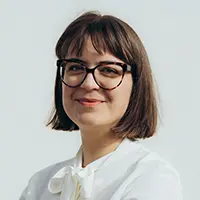 Pauline RivoireVice Chairpauline.rivoire@unil.chUniversité de Lausanne, Lausanne, Switzerland
 SwitzerlandShort BioPauline is a post-doctoral researcher at the Institute of Earth Surface Dynamics at the University of Lausanne, and at the CRYOS laboratory at the Ecole Polytechnique Fédérale de Lausanne (EPFL), Switzerland. She gained her PhD in climate sciences from the University of Bern in 2022. Her research interests are compound events, climate extremes (precipitation and temperature extremes), sub-seasonal forecasts, and extreme value theory.
 -
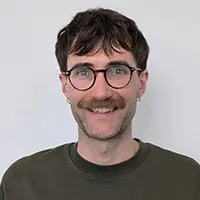 Owen WalpoleGrant Holder Managerowen.walpole@strath.ac.ukUniversity of Strathclyde, Glasgow, United Kingdom United KingdomShort Bio
 -
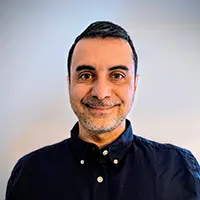 Alexandre RamosGrant Awarding Coordinatoralexandre.ramos@kit.eduKarlsruhe Institute of Technology, Karlsruhe, Germany
 GermanyShort BioAlexandre is a senior researcher at the Institute of Meteorology and Climate Research Troposphere Research - Karlsruhe Institute of Technology (Germany). His research focuses on Atmospheric Rivers and compound weather and climate extremes in the North Atlantic and their impacts on Western Europe, contributing to an improved understanding and forecasting of hydrometeorological extremes and windstorms.
 -
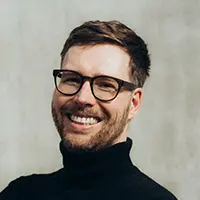 Martin WegmannScience Communication Coordinatormartin.wegmann@unibe.chUniversity of Bern, Bern, Switzerland SwitzerlandShort BioMartin is currently a scientific collaborator at the Oeschger Centre for Climate Change Research and open science officer at the University of Bern. His research focuses on large-scale climate variability, climate teleconnections and seasonal climate forecasts while he is also pushing for open and reusable research data distribution.
 -
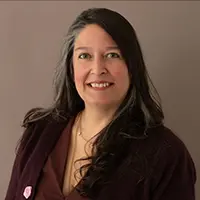 Ana RussoWG1 Leaderacrusso@fc.ul.ptInstituto Superior de Agronomia da Universidade de Lisboa, Lisbon, Portugal
 PortugalShort BioAna Russo is an Assistant Professor at the Instituto Superior de Agronomia and a researcher at CEF, University of Lisbon (Portugal). Her research focuses on climate extremes and compound events, and their impacts on air quality, ecosystems, and human health. She combines climate science, statistical and AI methods, and interdisciplinary approaches to advance understanding on interdisciplinary
 -
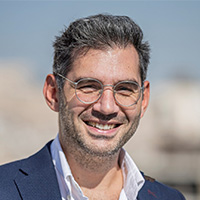 Ilias PechlivanidisWG1 Co-leaderilias.pechlivanidis@smhi.seSwedish Meteorological and Hydrological Institute (SMHI), Norrköping, Sweden
 SwedenShort BioIlias is an Associate Professor at SMHI and visiting researcher at Uppsala University in Sweden. He is a Fellow of ECMWF, Member in the Strategic Advisory Board of the Destination Earth initiative, elected Vice-Chair of the WMO Research Board, and an elected President of the EGU Hydrological Sciences Division. His research focuses on (impact-based) hydro-meteorological forecasting, user-centric early warnings and climate services.
 -
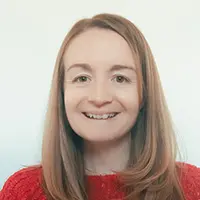 Hannah BloomfieldWG2 LeaderHannah.Bloomfield@newcastle.ac.ukNewcastle University, Newcastle upon Tyne, United Kingdom United KingdomShort BioHannah is an academic track fellow in climate resilient energy systems. She gained her PhD from the University of Reading in 2017 and has since worked on four climate services projects and early warning systems with relevance to the energy, transport and finance sectors. A key outcome of her work has been to improve the accessibility of large meteorological datasets to energy system modelers and policy makers.
 -
 Morten LarsenWG2 Co-leadermla@dmi.dkDanish Meteorological Institute (DMI), Copenhagen, Denmark
 DenmarkShort BioMorten is currently heading a research unit at The Danish Meteorological Institute (DMI) within ocean and dispersion modelling, comprising ~20 researchers, but is also active within fields of hydrology, atmospheric science, compound events, etc. Before DMI, Morten worked at the University of Copenhagen and at the Technical University of Denmark, incl. as a research group lead. Key research areas include climate change uncertainty with a focus on extremes, floods and impacts, compounds, and the Water-Energy nexus.
 -
 Joanne RobbinsWG3 Leaderjoanne.robbins@metoffice.gov.ukMet Office, Exeter, United Kingdom United KingdomShort BioJoanne manages the Weather Impacts Team at the Met Office and has 18 years’ experience working on risk and impact modelling for improved forecasting and warning of hydro-meteorological hazards. Key research areas include: developing impact models for hydrometeorological hazards (impact-based forecasting and warning); impact-based evaluation using novel, non-standard observations (e.g. using citizen science and social sensing methods); medium-range landslide forecasting and warning. She also sits on the steering group of the WMO’s WWRP Progressing EW4All Oriented to Partnerships and Local Engagement (PEOPLE) project.
 -
 Marcello ArosioWG3 Co-leadermarcello.arosio@iusspavia.itIstituto Universitario Di Studi Superiori Di Pavia (IUSS), Pavia, Italy
 ItalyShort BioMarcello is a Senior Researcher in Hydrology and Hydraulic Engineering at the IUSS University in Pavia, Italy. His research focuses on systemic risk assessment of natural hazards, with a particular emphasis on multi-hazard interactions, network-based modelling, and the cascading impacts of extreme events on infrastructure and socio-economic systems. He actively works at the interface between science and practice, developing decision-support tools for climate risk management and resilience planning.
 -
 Robert Šakić TrogrlićWG4 Leadertrogrlic@iiasa.ac.atInternational Institute for Applied Systems Analysis (IIASA), Vienna, Austria
 AustriaShort BioRobert is a senior researcher at the International Institute for Applied Systems Analysis (IIASA) in Austria. Trained both in engineering and social sciences, his research explores multi-hazards and their interactions within multi-risk frameworks, people-centred disaster risk reduction, and knowledge co-production, with a particular emphasis on bridging physical and social sciences to strengthen evidence for disaster and climate policy and practice.
 -
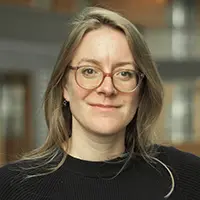 Marleen de RuiterWG4 Co-leaderm.c.de.ruiter@vu.nlVrije Universiteit Amsterdam, Amsterdam, Netherlands
 NetherlandsShort BioMarleen is an Assistant Professor in the Department of Water and Climate Risk at the Institute for Environmental Studies (IVM), Vrije Universiteit Amsterdam. Her research focuses on improving the modelling of multi-hazard risks including consecutive disasters followed by water-borne disease outbreaks, multi-hazard risk early warning systems, disaster risk reduction, and the temporal dynamics of disaster vulnerability. She is the current co-chair of the RiskKAN network and co-leads its working group on EWS & preparedness.
 -
 Silvia De AngeliWG5 Leadersilvia.de-angeli@univ-lorraine.frUniversité de Lorraine, Metz, France
 FranceShort BioSilvia is a Junior Professor in Sustainability Science at the University of Lorraine, France. She earned her PhD in Understanding and Managing Extremes at IUSS Pavia and has worked across academia and the private sector on disaster risk assessment and management, focusing on interdisciplinary approaches to multi-hazard risk. Her current research explores transdisciplinary modelling of the habitability of socio-ecological systems under climate risks.
 -
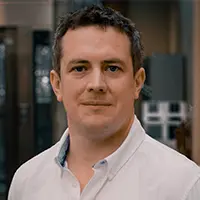 Fiachra O'LoughlinWG5 Co-leaderfiachra.oloughlin@ucd.ieUniversity College Dublin, Dublin, Ireland
 IrelandShort BioFiachra is an Assistant Professor in the School of Civil Engineering at University College Dublin (UCD) and the Director of the UCD Dooge Centre for Water Resources Research (CWRR). His research focuses on improving understanding of hydro-meteorological risk through the combination of modelling and remote sensing across various time-scales.
 -
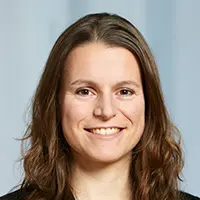 Daniela DomeisenCross-cutting WG Coordinatordaniela.domeisen@unil.chUniversité de Lausanne, Lausanne, Switzerland SwitzerlandShort BioDaniela is an Associate Professor who leads a research group at the University of Lausanne and ETH Zurich focusing on the large-scale dynamics of the atmosphere and its predictability on sub-seasonal timescales. A particular focus is placed on extreme and compound events such as heatwaves and precipitation extremes and their effects on a range of systems including processes at the Earth’s surface, e.g. permafrost, vegetation, and flooding, as well as societal impacts.
 -
 Nico CaltabianoWMO Network Coordinatoravazcaltabiano@wmo.intWorld Meteorological Organization, Geneva, SwitzerlandInternational Org.Short BioNico is a Scientific Officer in the secretariat of the World Weather Research Programme (WWRP) of the World Meteorological Organization (WMO). In WWRP, Nico provides coordination to several of the WWRP projects with focus on polar regions, integration of precipitation and hydrology predictions, and applications of sub-seasonal predictions. Nico is also providing support to several activities related to Artificial Intelligence in WMO.
 -
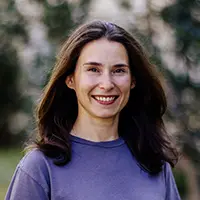 Andreia RibeiroYRI Network Coordinatorandreia.ribeiro@ufz.deHelmholtz Centre for Environmental Research (UFZ), Leipzig, Germany GermanyShort BioAndreia is a climate researcher at the Department of Compound Environmental Risks (CER) at the Helmholtz Environmental Research Center (UFZ), Leipzig, Germany, with a PhD in Geophysical and Geoinformation Science from the University of Lisbon, Portugal. Andreia’s recent work combines statistical and process-based modelling to investigate climate extremes and compound event impacts, including wildfires and agricultural impacts in a changing climate.
 -
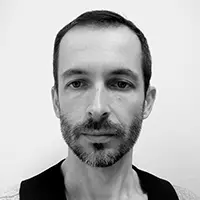 Stanislav HrončekITC Coordinatorstanislav.hroncek@gwpcee.orgGlobal Water Partnership Central And Eastern Europe, Bratislava, Slovakia
 SlovakiaShort BioStano is a project manager and innovation specialist at GWP CEE, focusing on climate resilience, water management, and multi-hazard risk reduction across Central and Eastern Europe. He leads the implementation of international initiatives, contributes to business development, and works closely with global and regional stakeholders. His background spans research and innovation policy, public administration, and advanced data-driven technologies, including roles in government and R&D management.