

Written by Jan Albertsboer
When I arrived at IIASA in July, I was excited to start this work. Analysing a full stakeholder survey dataset at this scale within just two weeks was new to me, and there was some nervousness about the timeframe and what we could realistically accomplish. Still, I was looking forward to seeing what the data would tell us. Two weeks later, I left with more than I had anticipated: a solid foundation for a peer-reviewed paper, concrete insights into what actually blocks multi-hazard early warning systems from working, and a much clearer picture of how research and practice connect in this field
What we set out to do
My main objective was to work through a full dataset for a paper: analyse the stakeholder survey on extended-range forecasting and early warning systems, process data from two prior workshops (in-person in Metz in June, online in March), and synthesise all three sources into publication-ready findings. What made this ambitious within two weeks was the scope: 129 survey responses from researchers, meteorologists, humanitarian workers, and disaster managers across 30 countries and six continents; quantitative results; open-text responses from 124 people describing barriers to anticipatory action; and workshop transcriptions and notes from over 100 participants. All of it needed to come together into a coherent narrative.
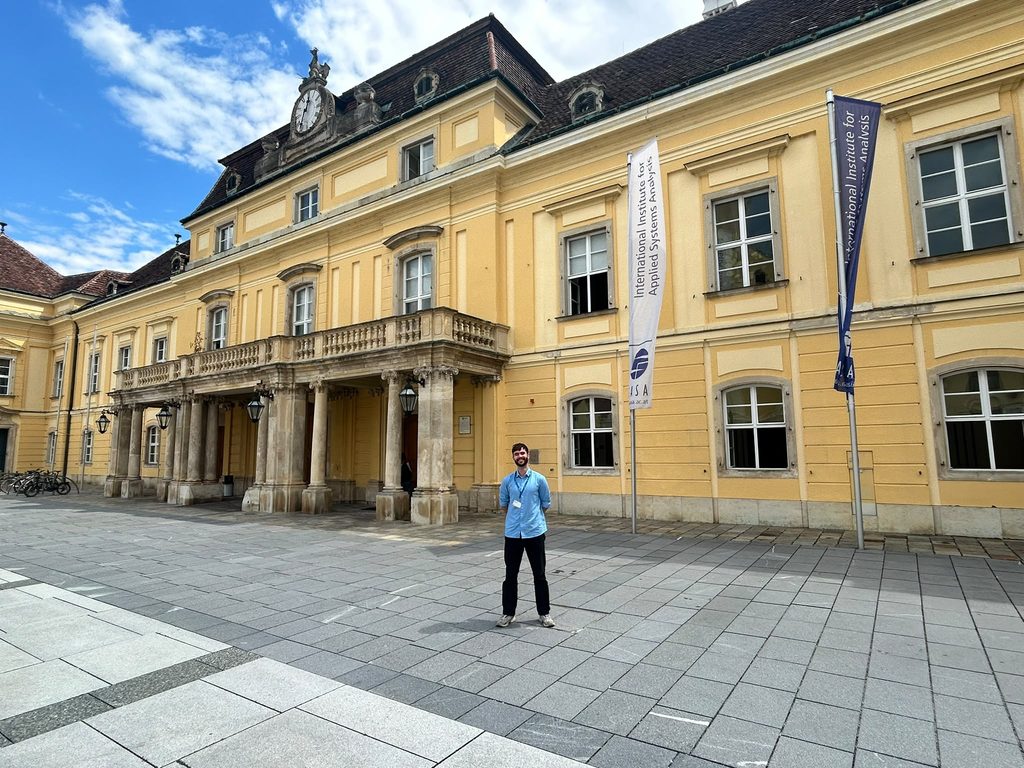
Institute for Applied Systems Analysis (IIASA) in Laxenburg, Austria, July 2026
What we actually did
The first few days involved data cleaning and validation: flagging duplicates, checking inconsistencies, making sure the patterns held up. The 129 open-text responses were a unique window into what practitioners and researchers actually experience, struggle with, and need.
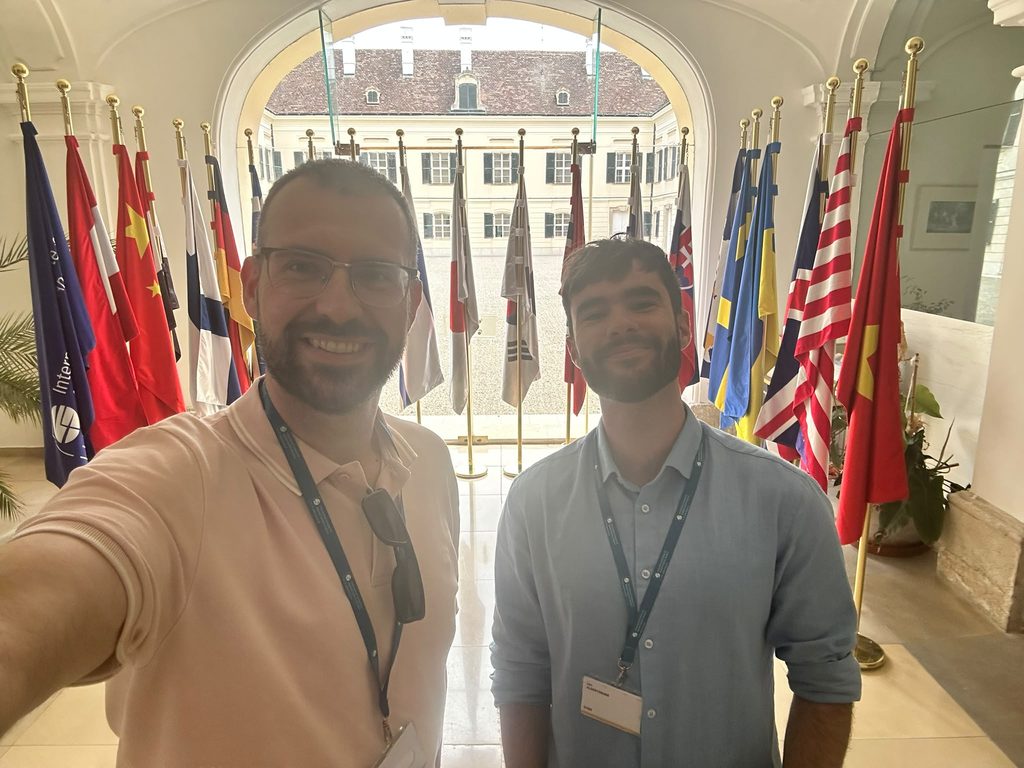
By mid-week, I was working through systematic thematic analysis of the survey and workshop data, using a framework by Naeem et al. that Robert had shared: a structured approach that keeps you grounded in respondents’ own language rather than imposing predetermined categories. I worked through the coding, the regression analyses (with Raquel’s help on the statistics), and the workshop transcriptions, testing whether apparent differences between researchers and practitioners reflected real disagreement or something else. It turned out to be confounded by hazard specialisation: practitioners working with compound hazards needed different lead times than those focused on single events. What I perhaps valued most, though, was getting to know people at IIASA: PhD students from the Young Scientists Summer Program working on climate adaptation, biodiversity, and energy systems, and colleagues around the institute. Through this STSM and Robert’s recommendation, I even had a conversation with Professor Christopher White while on holiday in Scotland, a connection that wouldn’t otherwise have happened. These conversations helped clarify what I was working on and why it matters.
What we found
The central finding cuts across all our data, from the survey to both workshops: the components for multi[1]hazard anticipatory action largely exist. We have forecast systems that produce useful information. Practitioners do think in multi-hazard terms. What’s missing isn’t better science, it’s the connection between them. One respondent put it well: “We’re at about 90% solution for the components, but they’re poorly connected.”
More specifically: institutional coordination is the biggest barrier (57% of respondents), extended-range forecasting is underused despite its real operational value, and what respondents need most is not new systems but ways to make existing ones talk to each other. The four-week lead time that matters most for anticipatory action, for pre-positioning humanitarian supplies, preparing water resources, and planning agricultural interventions, is currently a dead zone, where forecast skill drops and institutional decision-making frameworks don’t exist.
What I learned
The technical lessons are clear: how to work with survey data at scale, how to use systematic coding frameworks rigorously, what inferential statistics can and cannot tell you. But there’s also something about how research actually translates, or fails to translate, into action: good science alone doesn’t change anything if the people producing it and the people who need to use it aren’t in conversation. I really enjoyed working together with colleagues at IIASA, but did a lot of individual work too. Getting the balance right between working independently and getting help from Robert (and Raquel) when I needed it was itself something I learned from this STSM. I became much more comfortable with regression analysis and thematic analysis, methodologically rigorous but grounded in actual participant language.
What happens next
Paper drafting will happen over the coming months. I remain available to discuss interpretations and work through details of the coding and synthesis. In my opinion, there are parts of this large dataset that ncould be worth spending more time on, but I’m convinced we have what we need for a solid paper: the convergence across the three data sources (survey, Metz workshop, online workshop) is strong, and the findings are clear. Beyond the paper, there are follow-up questions the data opens up, particularly around the disconnect between governance barriers (which respondents see as primary) and technical solutions (which they prioritise). Why do practitioners and researchers frame the problem differently? That’s worth exploring further, but it’s a question for after this work is published.
Contributing to ANTICIPATE
This STSM directly supports ANTICIPATE’s mission to bridge research and practice on multi-hazard early warning. The paper emerging from this work, combining quantitative survey data from 129 stakeholders with qualitative insights from 110 workshop participants, will be a concrete resource for policy-makers and practitioners designing extended-range warning systems. More immediately, the findings are already informing how the project frames its guidance documents and training initiatives. Beyond the paper, 129 stakeholders across six continents are now connected to ANTICIPATE, their voices and operational insights part of our research. That network could be the foundation for the work that comes next. Two weeks at IIASA taught me that good research isn’t just about interesting data. It’s about understanding the people on both ends: those producing the information and those trying to use it. That understanding is what turns research into action.